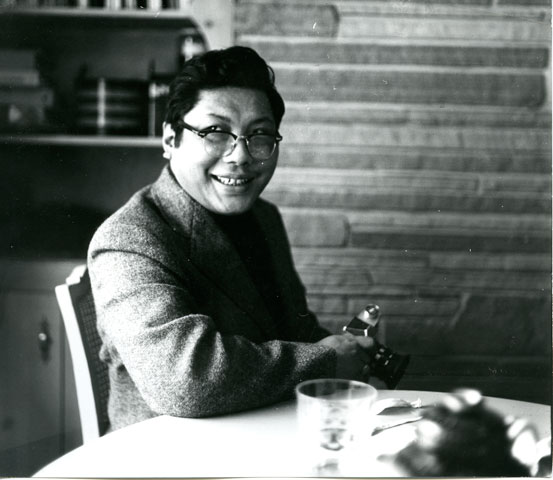
Picture of Chögyam Trungpa

Chögyam Trungpa

CTR Quote of the Week

The Bad News Is Good News

In the mahayana, inspiration comes from experiencing the spark of intelligence or enlightenment in us. Discovering that potential is one of the fundamental characteristics of the mahayana. Having looked into our feelings of inadequacy, pain, and confusion, we see them as neither good nor bad but as workable. In our day-to-day life, we find that the search for pleasure, either materialistic or spiritual, in unconvincing. Behind that whole approach is a sense of dissatisfaction and continual struggle.

Recognizing that dissatisfaction and struggle is the discovery of the first noble truth, the truth of suffering, or dukkha. However, that discovery of the universality of pain is the discovery of buddha nature as well. That realization is not stupid or ignorant, but intelligent. So the struggle we go through is an expression of enlightened mind. The bad news is itself good news.

From “A Golden Buddha,” in “Glimpses of Mahayana” one of four short works in Glimpses of the Profound, page 11.

Visit the Chogyam Trungpa Digital Library to access more than 550 audio and video recordings.

Share Quote

Subscribe to

Quote of the week

Our newsletter

Experience the Gaps

In everyday life, we habitually try to conceal the gaps in our experience of mind and body. These gaps are a bit like an awkward

Read More

Joining the Victorious Ones

An empowerment, or abhsheka, is further sunrise, further East, further dawn of Vajrasattva, further Tai Tung (Great East). Abhisheka enables you to be among the

Read More

Royal Empowerment

A vajrayana empowerment is a kind of baptism or coronation. It is the coronation of the student as a would be king or queen. In

Read More

Transmission

Basically, transmission is the meeting of two minds. Understanding this is absolutely necessary. Otherwise, there is no way out and no way in–there is no

Read More

The Tradition of the Trungpas

The tradition of the Trungpas evolved to its best capability in presenting what is known as the “three disciplines.” These are the disciplines of exertion,

Read More

Embodying the Teachings

In my education, I was constantly criticized. I had been brought up strictly since infancy, from the age of eighteen months, so that I had

Read More

A Vow for This and Future Lives

When you take the bodhisattva vow, you make certain promises and take on certain disciplines because of your surroundings. You commit yourself, not for yourself,

Read More

A Very Gradual Process

The first stage of development, or the first bhumi, on the bodhisattva path is described in the scriptures as a state in which you have

Read More

Bardo Is Not a Myth

If we see the Tibetan Book of the Dead only from the point of view of what happens when we die, it becomes like the

Read More

What is Bardo?

In the Tibetan Book of the Dead, there is a great deal of discussion of the Bardo. Bardo means gap. It refers to the interval

Read More

The Book of Space

The Tibetan Book of the Dead is based on the fundamental principle of birth and death recurring constantly in this life. One could refer to

Read More

Receiving Others as Guests

If you can afford to be what you are, then that automatically means you could receive others as your guests. Because the ground your guests

Read More